Anastasia in Concert Proves Less Can Be More
★★★★
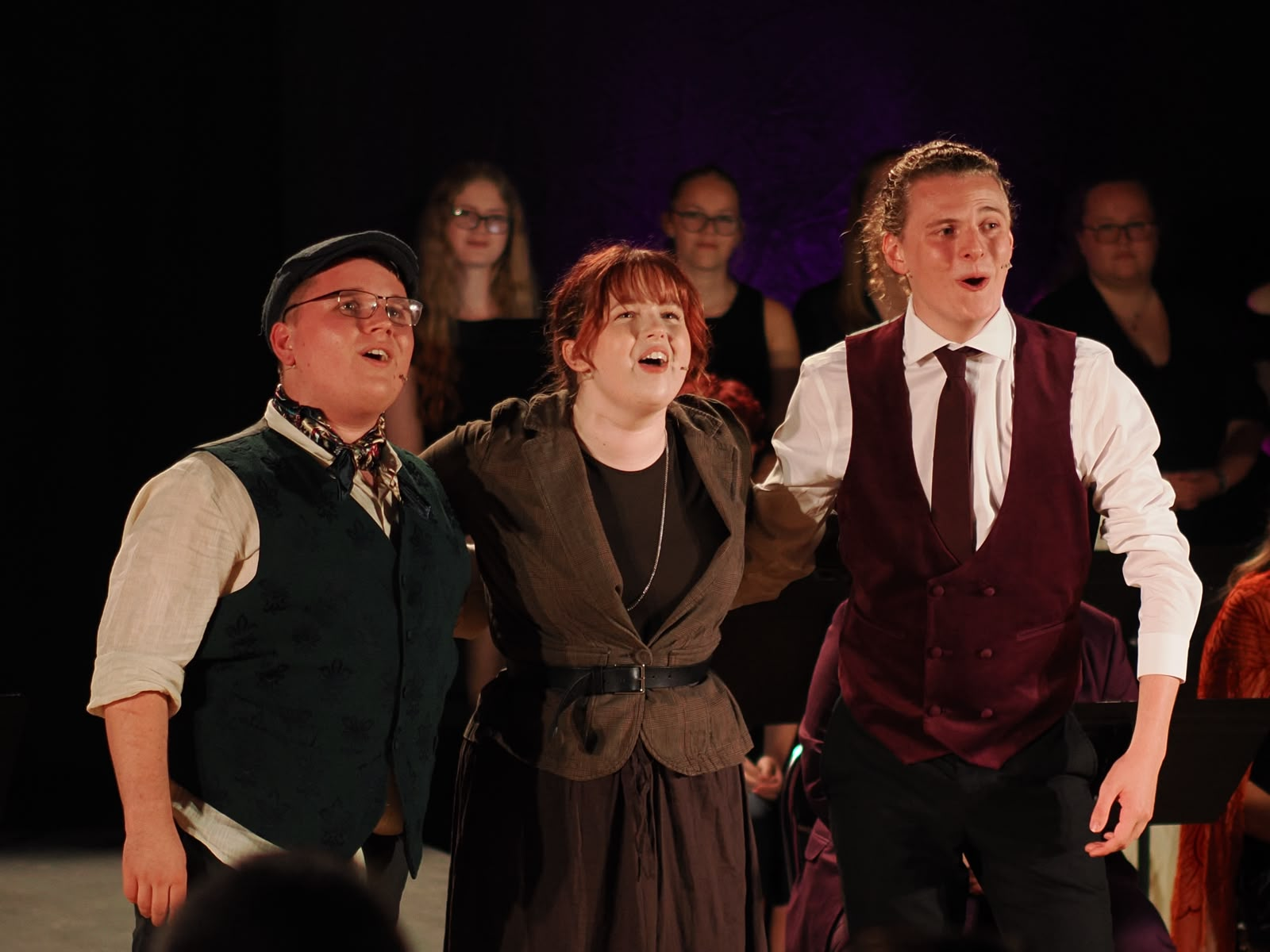
There is something exciting about a company setting itself a challenge, and Anastasia the Musical in Concert was certainly that. Four principal casts across the University of Chichester Conservatoire Musical Theatre Company run, a large ensemble, ballet, choreography and a huge score, all put together in just five intensive rehearsal days.
It was a very ambitious project, and across the first two performances it mostly paid off.
The opening on Friday showed just how big the challenge was. The ensemble felt a little shy at first, with some tentative singing and a few moments where things were not quite together. It took a little while for everyone to settle into the space and into the score. But once they did, the evening really started to lift. The ensemble sound grew in confidence, the storytelling became clearer and the company numbers began to feel much more secure.
Saturday felt more settled from the beginning, and that was encouraging to see.
The concert format suited Anastasia really well. Rather than trying to recreate a full production, it relied on the music, the performers and the audience’s imagination.
The Chapel of the Ascension was used cleverly. The audience sat in a U-shape around the playing space, with a thrust running into the middle. That meant the performers were often very close to the audience, which gave the whole thing a lovely intimacy. The ensemble stayed visible around the action, so even when they were not directly in a scene, they still felt part of the world of the show.
It also meant there was nowhere to hide, in a good way.
Some of the strongest moments came when a performer simply stood close to the audience and told the story without too much fuss around them.
The set was very simple, but there were some nice ideas in it. Two plinths stayed visible throughout the show. One held Anastasia’s music box, representing the old Russia, while the other held the telephone, representing the new Russia. It was a simple image, but it worked. The two objects were always there, quietly reminding us of the two worlds the story sits between.
Flags, furniture and a few well-chosen props did the rest. The Chapel itself became a big part of the design.
There were a few sound issues on Friday, particularly with the balance, and at times that got in the way a little. By Saturday, though, things had improved noticeably and the whole show felt much more comfortable technically.
One of the most interesting things about seeing the first two nights was watching two completely different principal casts.
Emma Fairbrass brought warmth, emotional clarity and a lovely natural vulnerability to Anya, while Lois Pell found a different route into the role, with a strong sense of determination and an increasingly assured emotional journey.
The two Dmitrys also had very different qualities. Toby Scott gave the role charm, energy and a believable ease with Fairbrass, while Izzy Blay brought a grounded confidence and a strong sense of connection to Pell’s Anya. Both made the relationship feel individual rather than simply following the same set of choices.
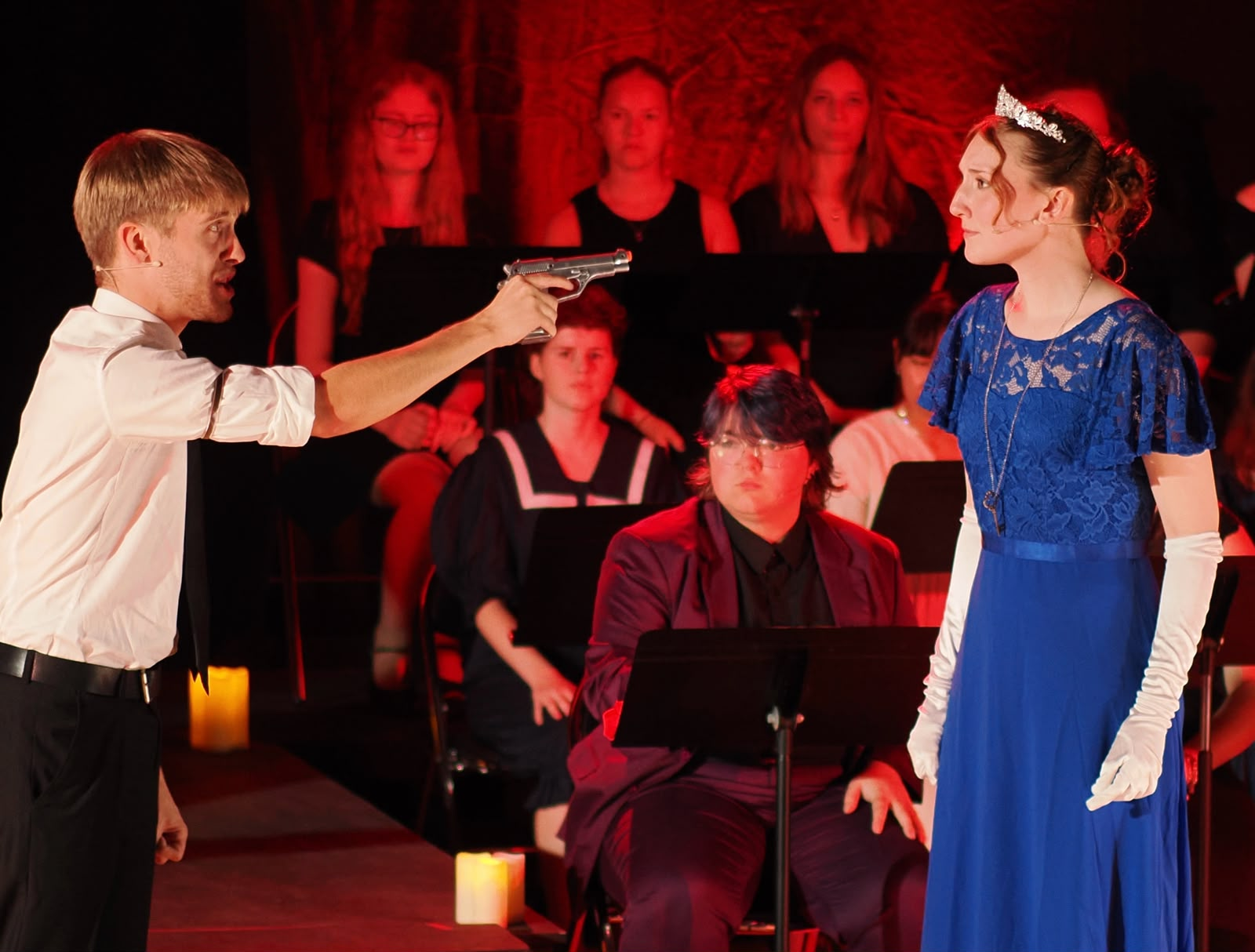
As Vlad, Ewan Purser was warm, funny and effortlessly likeable, with an easy stage presence that made the role feel very natural. Ashley Bale brought strong comic instincts, personality and a different energy to Vlad, giving the character his own distinct flavour.
The two Glebs were equally interesting. Ellie Hunter gave the role a stern, austere quality and a strong sense of contained tension, while Lucas Hutchings was calmer and more measured, making his Gleb quietly unsettling. Both then handled the final emotional release in “Who Are You?” with real force, allowing that control to explode into roaring anger without losing the character’s inner conflict.
Astrid Jiajun Pu brought dignity, authority and a beautiful stillness to the Dowager Empress, making her quieter moments particularly effective.
Heather Wisson stood out for her clear character choices and confident stage presence, while Rose Holmes brought warmth and a strong sense of storytelling to her work. Lisette Oikonomou had a lovely theatrical energy, with wit, confidence and a clear enjoyment of the material.
One of the strongest ensemble moments was “Stay, I Pray You”, which brought together some of the best company and solo singing of the evening. Luke Mitchell brought sensitivity and a pleasing vocal colour to the featured solo, even if first-night nerves showed a little on Friday, while Adam Gould sang with confidence, control and a strong sense of emotional connection to the number. It was also one of those moments where the ensemble really seemed to lock together, both musically and emotionally.
The ballet was particularly strong and gave the concert a real visual lift. The ballet choreography by Jaiden Reeve brought elegance and shape to the Swan Lake sequence, while Zoë Bonnington, as the Prima Ballerina, danced with poise, control and a strong sense of presence. It gave the sequence a polish and theatrical scale that went well beyond what might normally be expected from an in-concert staging.
The movement more generally was also a real strength. Molly Skellon’s choreography and movement made good use of the large company and the unusual layout of the Chapel. The transitions were fluid, the stage pictures were strong and the movement helped stop the concert from ever feeling static.
That was important, because Anastasia is a musical we often think of as being visually huge. Palaces, trains, revolution, St Petersburg, Paris. Here, most of that had to be suggested rather than shown.
And actually, very little felt missing.
Of course, it was not completely polished. The tentative opening on Friday, the odd ensemble moment and the sound issues showed that this had been put together at speed. Another week of rehearsal would almost certainly have tightened some things up.
But that is not really the most interesting thing about the project.
The more interesting thing is what they managed to achieve in five days.
Across the first two performances, the company grew in confidence in front of us. The ensemble that felt a little unsure at the start of Friday had become much more assured by the end of the evening, and Saturday already felt like a stronger, more settled show.
There is also something about Anastasia that works especially well in this kind of format. Underneath all the scale and romance, it is a story about memory, identity, family and belonging. Stripping away some of the usual theatrical machinery brought those things into sharper focus.
At its best, this never felt like a smaller version of a full production, rather, it felt like its own version.
Four casts, one ensemble, a handful of objects, strong movement, a big score and an audience sitting almost inside the story. Ambitious, not always perfect, but warm, imaginative and full of potential!
And in this case, less really can be more.
Thank you to The University of Chichester for providing us with complimentary tickets in exchange for our honest review.
Images: Andrew Worsfold