Application 39: Intimate, Immersive and Unforgettable
★★★★
Application 39 is a powerful and immersive production that makes particularly strong use of the Weston Studio at Bristol Old Vic. The intimacy of the space allows the audience to feel incredibly close to the characters, while the production uses the studio itself as an important part of the storytelling.
At its heart, Application 39 explores Gaza, Palestinian identity and the possibility of a future beyond the devastation of war. Written by Palestinian writer Ahmed Masoud, who grew up in Gaza, the production draws on real-life testimony, including testimony from Gaza itself. It imagines a future Gaza attempting to rebuild and even host the 2048 Olympic Games, creating an interesting contrast between the destruction we associate with Gaza and the possibility of reconstruction and hope.
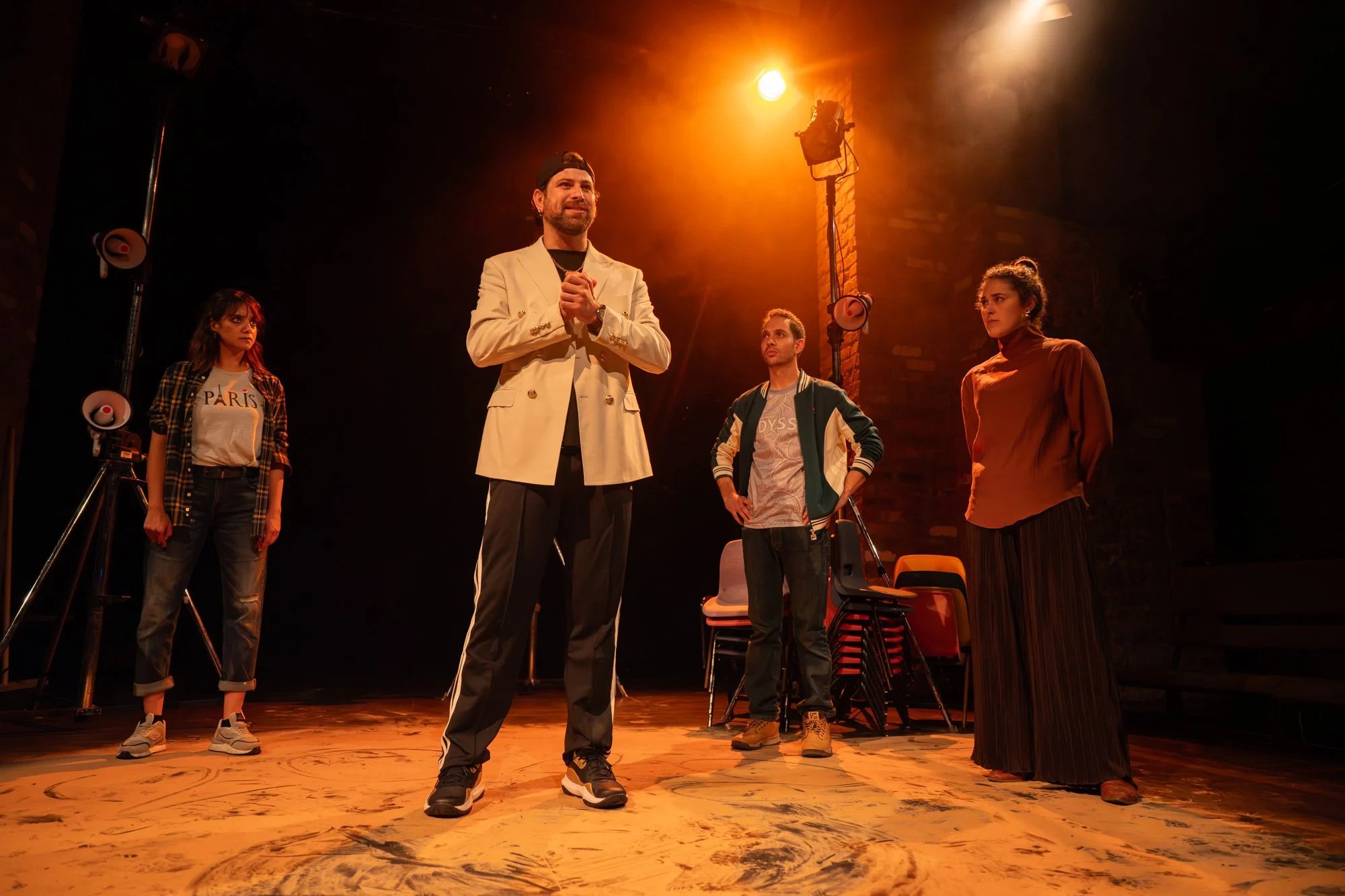
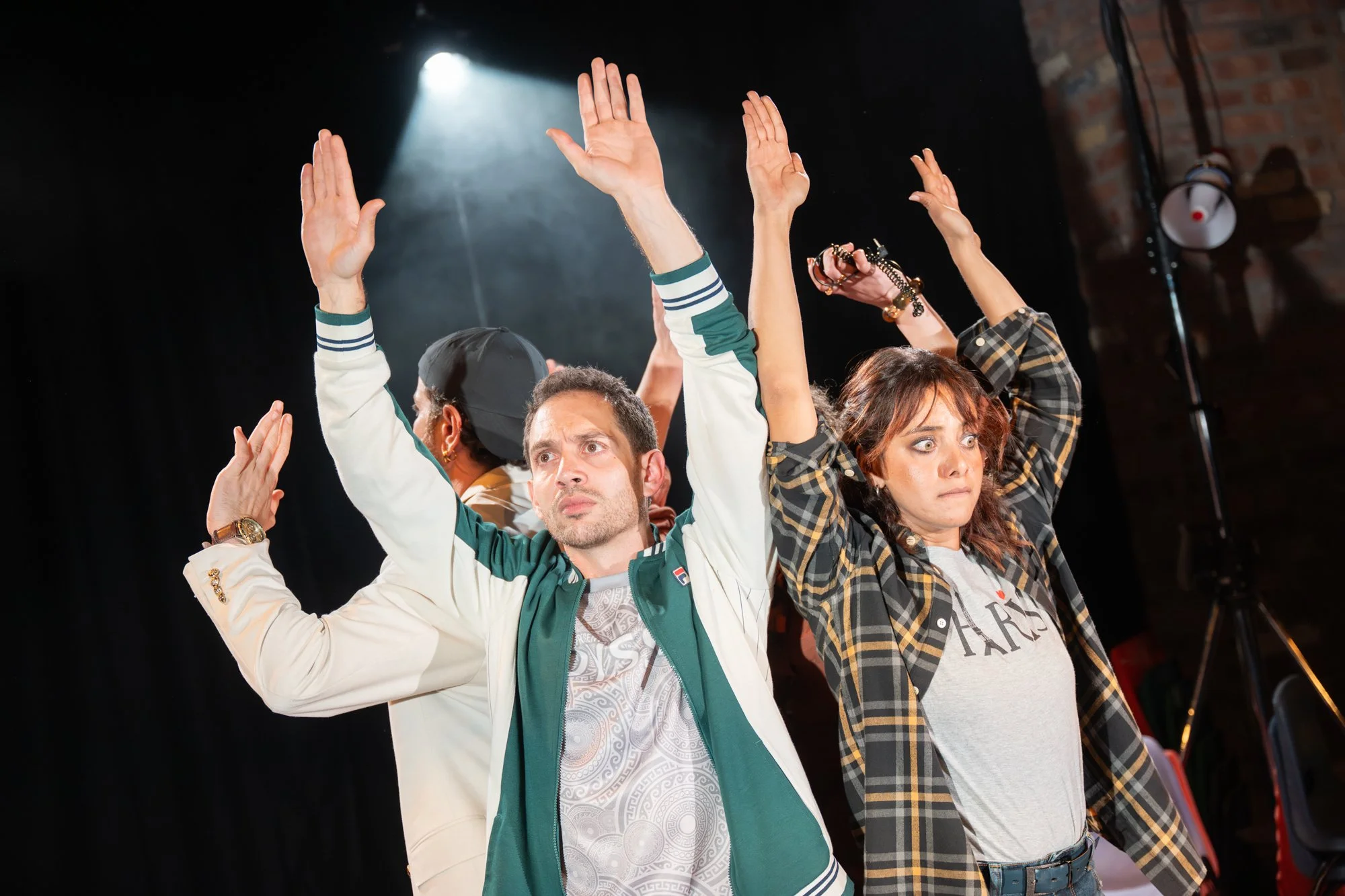
One of the production’s strongest elements was its sound and lighting. The sound design created an immersive atmosphere, while the lighting helped distinguish different moments in the story and made the flashbacks much clearer. The blackout was particularly effective, demonstrating how much could be achieved within the Weston Studio without relying on elaborate staging. The combination of darkness, sound and lighting allowed the audience’s imagination to take over.
The production also made excellent use of symbolism within the set. The sand created a striking visual image, while the use of primary school chairs was particularly effective. Their familiarity immediately connects them with childhood and innocence, creating a powerful contrast with the themes of conflict and war. Seeing objects associated with an ordinary childhood placed within a story centred around Gaza made the set feel particularly poignant.
The writing by Ahmed Masoud was another major strength. The imagery was incredibly vivid; there were moments where you could almost see what was being described without actually seeing it. Rather than relying on everything being physically shown, the writing allows the audience’s imagination to complete the picture.
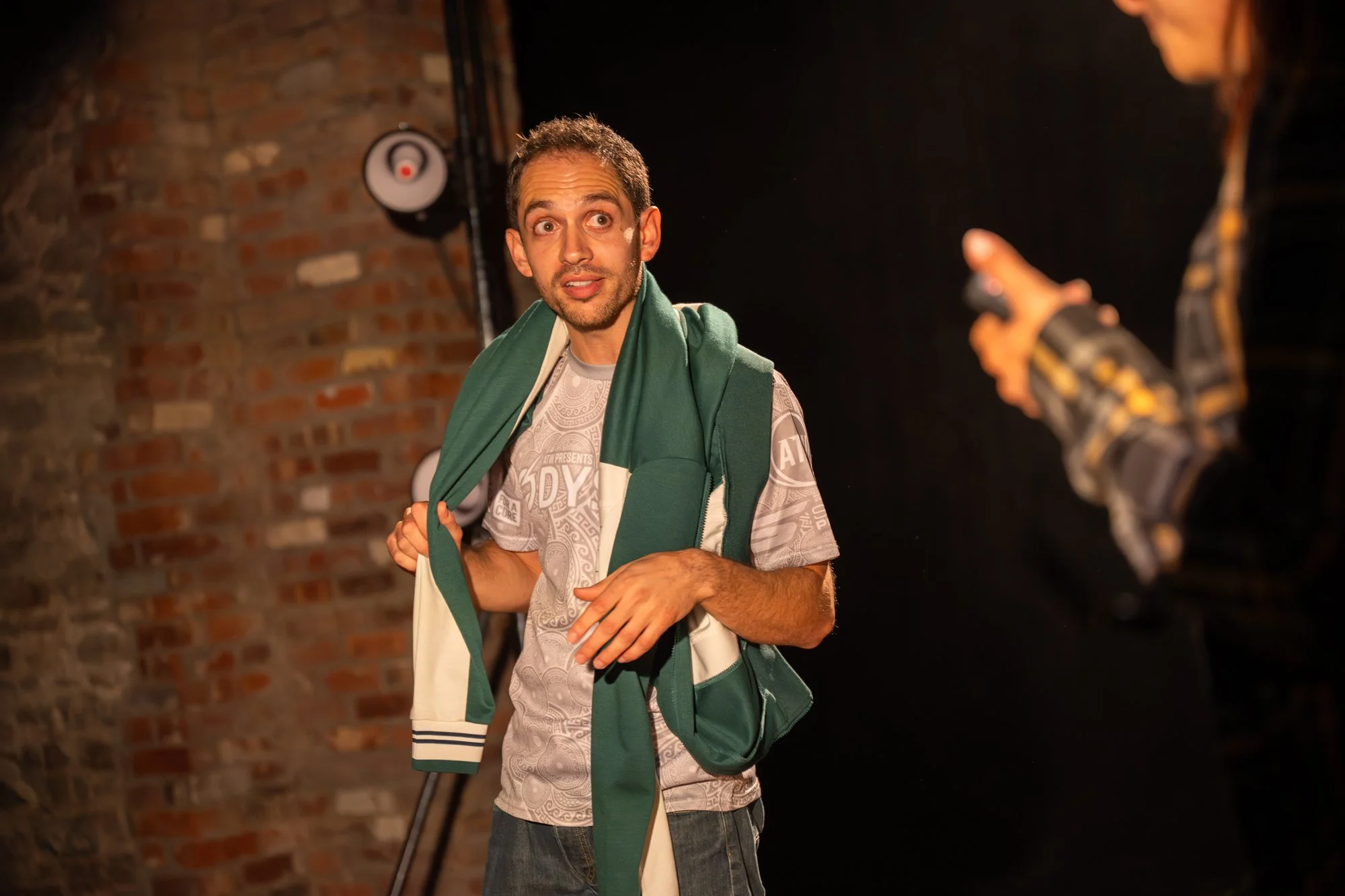
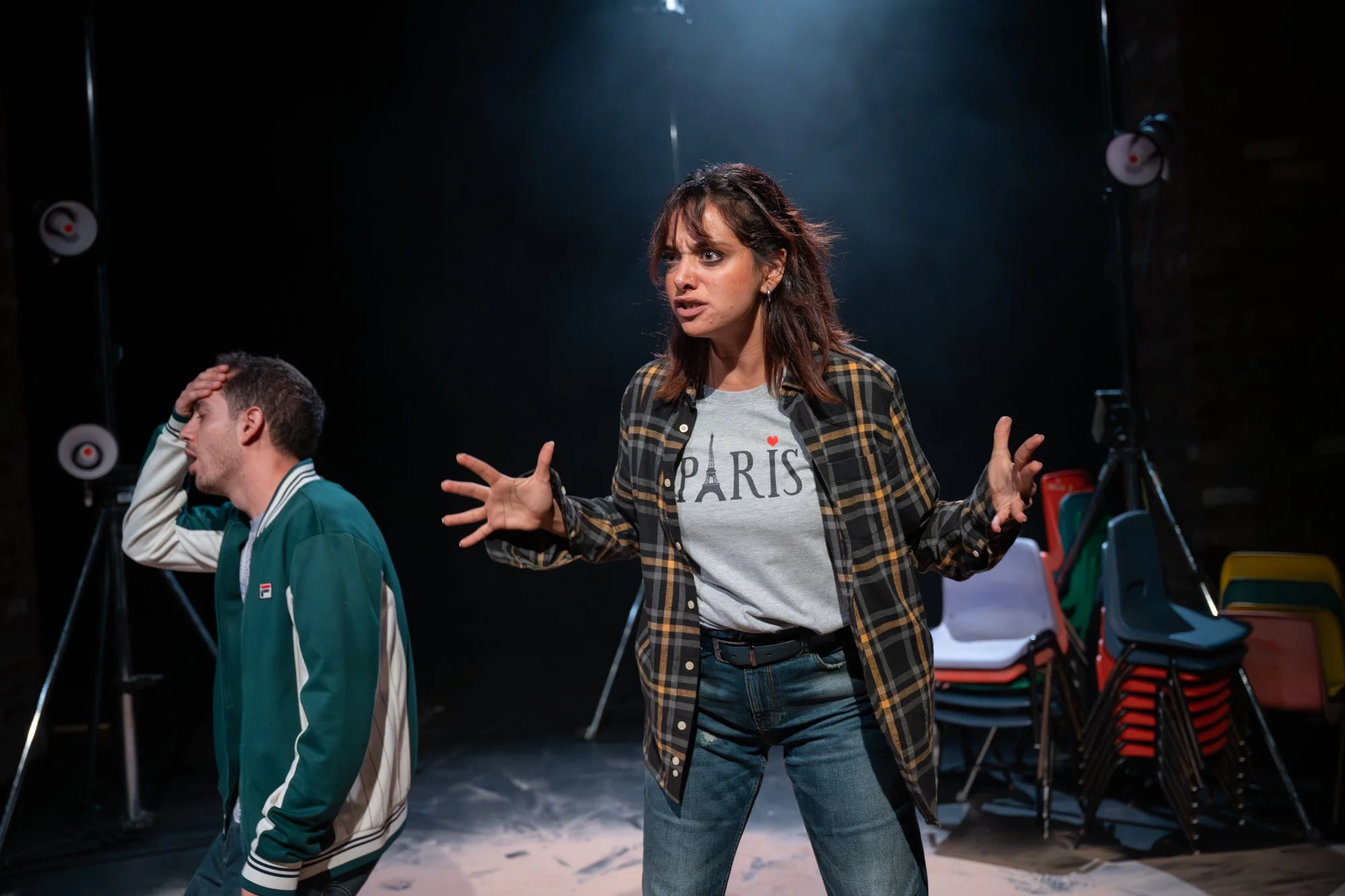
A particular strength was the relationship between Selma and James, who portray themselves at different ages. They had a vibrant chemistry whenever they were acting together, naturally bouncing off one another and creating believable relationships across the different periods of the story.
This was particularly powerful in the scene where Selma and James portray their younger selves at just nine years old, having survived a bombing during the conflict in Gaza. Seeing two children having to navigate the aftermath of war was incredibly heartbreaking. Their age makes the situation even more difficult to process; these are children who should be thinking about school, friendship and ordinary childhood experiences, yet they are instead confronted with the reality of war.
The scene doesn’t need to rely on graphic imagery to communicate the devastation. The performances, writing and symbolism allow the audience to understand what has happened and imagine the reality surrounding these two children. In the context of the ongoing war in Gaza, the scene carries an especially painful contemporary resonance. It takes something that can sometimes feel distant when encountered through news reports and places the human experience of children directly in front of the audience.
There were several other strong performances throughout. Nadia had a particularly strong stage presence and commanded attention whenever she was on stage, while Ghantus brought some very effective comedic timing. Selma and James were also able to move naturally between humour, vulnerability and much heavier emotional material.
The use of the thrust stage worked particularly well within the Weston Studio, bringing the actors into close proximity with the audience. The audience engagement was another major strength, with the production making use of the space itself rather than simply placing a story inside it.
There were a few practical elements that could be refined. The megaphones did not always feel as practical within the space as they could have been. The hanging lights were visually effective, but their positioning created a potential practical concern, particularly in such a confined performance space where an actor or audience member could accidentally bump into one. There were also moments where the actors appeared to be adjusting to the lighting and aligning themselves with the set. These were relatively minor issues, but they were noticeable.
The production also handled an unexpected moment professionally. During one emotional scene, a phone call interrupted the performance, which could easily have broken the atmosphere. However, the actors composed themselves and continued, maintaining the emotional focus of the scene.
Ultimately, Application 39 is a production that stays with you. Its vivid writing, symbolic set, immersive technical design and strong performances combine to create something genuinely thought-provoking and heartbreaking. Its portrayal of Gaza doesn’t reduce the story to statistics or headlines; instead, it gives the audience personal relationships, childhood memories, humour, loss and hope to connect with.
While there are a few practical and technical elements that could be refined, Application 39 delivers an intimate, immersive and emotionally powerful theatrical experience. Most importantly, it leaves you with a message that continues to sit with you long after leaving the theatre.
Thank you to Bristol Old Vic for providing us with complimentary tickets in exchange for our honest review.
Images: Tommy Ga-Ken Wan