Gujarat may not be the first place that comes to mind when planning a trip to India, but the state has plenty to offer travellers willing to explore beyond the usual tourist route. India is a country where every region has its own identity, and Gujarat is no exception.
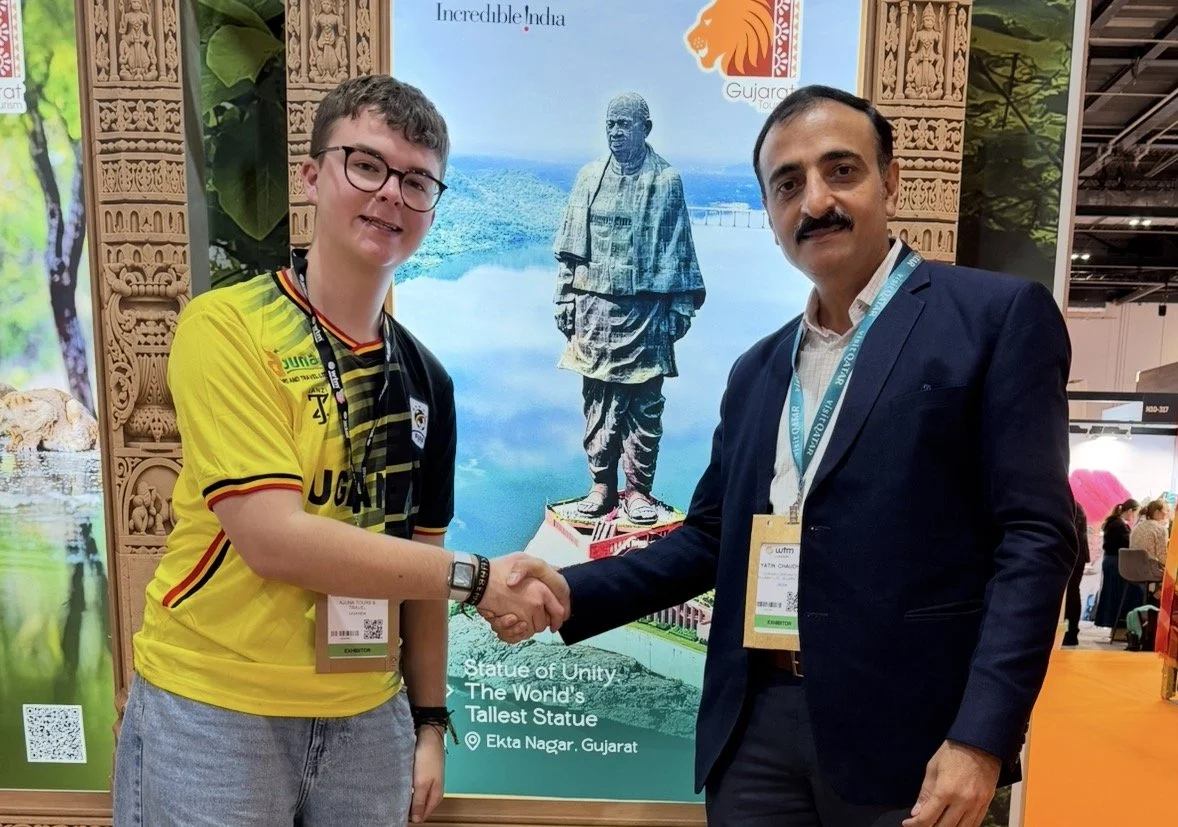
At World Travel Market London, I spoke to Yatin Chaudhari, Joint Managing Director of the Tourism Corporation of Gujarat Limited (TCGL), about what makes the state worth visiting and what travellers can expect when they arrive.
“There is iconic tourism, religious tourism, sports tourism,” Chaudhari explained. “One can experience heritage, education.”
There is certainly no shortage of places to explore. Gujarat is home to the Statue of Unity, the world’s tallest statue, while the White Rann offers a completely different experience. The vast expanse of white salt creates a landscape unlike many other parts of India.
But Gujarat is not just about its landmarks. For Chaudhari, experiencing the culture is just as important. One of the biggest events on the calendar is Navaratri, the nine-night festival held every October. The celebrations are centred around dance, with people across the state joining in.
“It is a nine-day dance festival, the longest in the world,” Chaudhari said. He also took part in the celebrations himself this year, telling me that he “had fun”.
For a visitor, it offers the opportunity to experience Gujarat alongside the people who live there, rather than simply watching from the sidelines.
The best time to visit
If you’re considering a trip, Chaudhari recommends visiting between October and January.
“It is dry season and the temperature is best,” he said.
October also brings Navaratri, while visitors later in the season can experience Diwali. The Festival of Lights is another major celebration that Chaudhari believes is well worth experiencing as a tourist.
Don’t rush Gujarat
One of his biggest pieces of advice for visitors is to allow enough time.
“Minimum 15 days to experience,” he said.
With thousands of years of history, Gujarat has plenty to discover, from its heritage and culture to its religious sites. The Ambaji Temple is among the places visitors can explore, adding another dimension to a trip through the state.
Safety is another point Chaudhari was keen to highlight. He described Gujarat as “very safe” and said it is particularly suitable for female and solo travellers.
That could make the state an appealing option for travellers who want to explore India independently.
More than a stop on the map
Listening to Chaudhari talk about Gujarat, what comes across most strongly is the variety. You can visit one of the world’s most recognisable modern landmarks, stand among the salt plains of the White Rann, explore thousands of years of history or spend nine nights dancing during Navaratri.
And then there is Diwali, temples, heritage and the opportunity to experience a different side of India away from the country’s better-known tourist destinations.
Gujarat isn’t somewhere to simply tick off in a couple of days. If Chaudhari’s advice is anything to go by, give it at least two weeks and allow yourself time to discover what makes the state unique.